onsdag 21 oktober 2015

Hur länge kommer vi i Sverige att tillåta en Israelisk ambassadör hetsa mot muslimer och palestinier?


I en intervju i SVTs agend (18/10-2015) hetsar Israels ambassadör i Sverige Isaak Bachman en än gång mot en folkgrupp. Förra gången var det mot muslimer på en Facebookpost (12/1-2015) (se: http://drorfeiler.blogspot.se/2015_01_01_archive.html) och nu i Agenda hetsar Bachman mot Palestinierna som grupp när han säger att "...Innan staten Israel bildades samarbetade palestinierna med tyskarna och Hitler om den slutliga lösningen av judefrågan i fall tyskarna kom till Israel. Det här började långt inan staten Israel ens fanns, och det bara fortsätter. Det handlar om hat mot judar och sedermera mot Israel..." (se bifogade video eller länken till Agenda: http://www.svt.se/agenda/se-program/agenda-57 (29:50))

Man undrar hur länge kommer vi i Sverige att tillåta en israelisk ambassadör hetsa mot muslimer och palestinier.

lördag 17 oktober 2015

Stop the Killing, End the Occupation: Statement from the Global Jewish Network for Justice


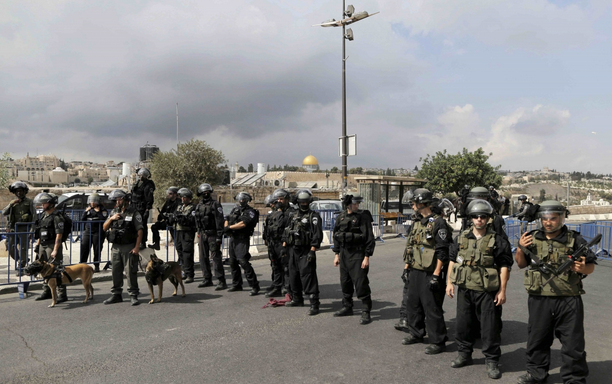
As members of Jewish communities around the world, we are horrified by the violence that is sweeping the streets of Palestine/Israel, costing the lives of over 30 people, both Palestinians and Israelis in the past two weeks alone. A 2 year old girl in Gaza was the youngest of 4 Palestinian children who were killed in the past two weeks. A 13 year-old Israeli boy is in critical condition after being stabbed nearly a dozen times. Over a thousand people were injured in the same period. Fear has completely taken over the streets of Jerusalem, the center of this violence. Israelis shooting Palestinian protesters in and around East Jerusalem. Palestinians stabbing and shooting Israeli civilians and policemen in the middle of the streets. Israeli forces killing Palestinian suspects when they are clearly not a threat and without trial. Palestinians throwing stones at passing cars. Israeli mobs beating up Palestinians or calling on police to shoot them. Humiliating strip searches of Palestinians in the streets – all of these have become a daily occurrence in the city in which we are raised to pray for peace, as well as other places in Israel, Gaza and the West Bank.

While violence is visible on the streets, it is also occupying people’s minds and hearts. Fear is bringing out the worst of people, and the demand for more blood to be shed, as if this will repair the damage done. Fear and racist rhetoric are escalating the situation. The Israeli government is once again responding in a militarised way: there have been hundreds of arrests; Palestinian access to the Al-Aqsa mosque compound has been limited; parts of the Muslim quarter of the Old City of Jerusalem have been closed to Palestinians; open-fire regulations have been changed to allow the use of sniper fire against children; a minimum sentence for stone throwing has been introduced, including for over 150 children arrested in East Jerusalem alone in the past few weeks; and now there are talks of enforcing a curfew, or even a closure, of East Jerusalem.

All these constitute collective punishment on the entire population of East Jerusalem with over 300,000 people. In the past, these measures have proven themselves ineffective at ending violence. Decades of dispossession, occupation and discrimination are the main reasons for Palestinian resistance. Further Israeli military repression and ongoing occupation and siege will never end the Palestinian desire for freedom nor will it address the root causes of violence. Indeed, the current actions by the Israeli government and army are likely to create further violence, destruction, and the entrenchment of division. Only justice and equality for all will bring peace and quiet to the residents of Israel and Palestine.

As a group of Jews from around the world we believe that immediate change needs to come from the Israeli government and Israeli people. It is incumbent on all Jews around the world to pressure the Israeli government – and those who follow and support its words and deeds – to change its approach. The military crackdown must cease immediately, Palestinians must be allowed complete freedom of movement. It is also a responsibility of Jewish people worldwide to obligate the countries in which we live to immediately cease the economic and military support of the ongoing Israeli occupation in Palestine and siege of Gaza.

We call on our Jewish communities, and our broader communities, to publicly insist on an end to the violence, occupation, siege and military response and instead demand equality and freedom for the Palestinian people and justice for all.

Shomeret Shalom Rabbinic School & Learning Center
Independent Jewish Voices Canada
Australian Jewish Democratic Society (AJDS)
Women in Black, Melbourne
Jewdas, UK
Tzedek Chicago
South African Jews for a Free Palestine
Jewish Voice for Democracy and Justice in Israel/Palestine (jvjp), Switzerland
Een Andere Joodse Stem, Another Jewish Voice – Belgium
Jewish Socialists’ Group – UK
Sahar Vardi, Jerusalem
Micha K. Ben David, Jerusalem
Daniel Mackintosh, London
Ilana Sumka, Belgium
Yael Shafritz, London
Rabbi Brant Rosen, Chicago
Rachel Diamond, London
Sivan Barak, Melbourne
Jordy Silverstein, Melbourne
Bianca Neumann, São Paulo
Gabriela Korman, Porto Alegre
Annie Cohen, London
Eran Cohen, London
James Kleinfeld, London
Joseph Finlay, London
Lev Taylor, London
Shajar Goldwaser, São Paulo
Iara Haasz, São Paulo
Lilian Avivia Lubochinski​, São Paulo
Elena Judensnaider Knijnik, São Paulo
Yuri Haasz, São Paulo
Juliana Westmann Del Poente, São Paulo
Breno Altman, São Paulo
Igor Fillippe Goldstein, São Paulo
Pedro Haasz Lakatos, São Paulo
Moriel Rothman-Zecher, Jerusalem.
Aryeh Bernstein, Chicago
Micah Hendler, Jerusalem
Rabbi Lynn Gottlieb
Robin Rothfield, Melbourne
Joan Nestle, Melbourne
Jem Light, Melbourne
Sue Leigh, Melbourne
Ben Silverstein, Sydney
Alex Nissen, Melbourne
Margaret Jacobs, Melbourne
Rae Abileah, USA
Shereen Usdin, Cape Town
Lily Manoim, Cape Town
Merlynn Edelstein, Cape Town
David Fine, Cape Town
Dr. Fran Shahar, Atlanta
ilise cohen, Atlanta
Michal Shilor, Jerusalem Raoul Fishman
Judy Favish, Cape Town
Sheila Barsel, Cape Town
David Sanders, Cape Town
Heidi Grunebaum, Cape Town
Anya Topolski, Belgium
Dror Feiler, Sweden, Chair person for EJJP

Please share this statement, which was initiated by an international Jewish network of groups and individuals working for justice in Palestine. We reclaim Jewish identity not as a nationalist identity but as one that celebrates our diverse roots, traditions & communities wherever we are around the world. We believe that it is essential for there to be a global Jewish voice to challenge Israel’s destructive policies, in solidarity with the Palestinian struggle. This international Jewish network aims to become that voice.
If you would like to sign on to this statement as an individual or a group, please contact me through the comment board on: http://rabbibrant.com/2015/10/16/stop-the-killing-end-the-occupation-a-statement-from-the-global-jewish-network-for-justice/

måndag 31 augusti 2015

Ett avslag på min begäran för prövningstillstånd av tre mål om "våldsamt motstånd".

Jaha, så där kom presenten lagom till min födelsedag! Från Högsta Domstolen: ett avslag på min begäran för prövningstillstånd av tre mål om "våldsamt motstånd".

Att ha bidragit till denna klargörande lagtolkning (polisens och rättsväsendets) är inte fy skam: att vissa manifestationer/demonstrationer är tillåtna och ok, och andra brottsliga.

Nu återstår att gå vidare och se till (med politiskt arbete, civil olydnad mm) att lagen skrivs om, så att yttrandefriheten (inom lagens ramar) ska gälla för alla och för att den ena manifestationen/demonstrationen inte ska ha större rättigheter än den andra!

Jag har som sagt gripits för att inte ha åtlytt uppmaningen att sluta spela Pippi Långstrump på saxofon under en motmanifestation och för våldsamt motstånd. Jag döms till böter, inte för själva spelandet, utan för att inte ha åtlytt polisen och för att passivt ha motsatt mig omhändertagandet.

Att spela Pippi Långstrump på sax och att vägra acceptera att min yttrandefrihet är mindre värd än rasisternas kan säkert vara en nog så skrämmande upplevelse, men lagbrott?


måndag 8 juni 2015

Israeli officials on the Palestinian state issue in their own words:

Benjamin Netanyahu, Prime Minister

“I think anyone who is going to establish a Palestinian state and to evacuate territory is giving radical Islam a staging ground against the State of Israel.” (Politico, 3/16/15)

“I think the Israeli people understand now what I always say: that there cannot be a situation, under any agreement, in which we relinquish security control of the territory west of the River Jordan.” (Times of Israel, 7/13/14)

Naftali Bennett, Minister of Education:

“I will do everything in my power to make sure they [Palestinians] never get a state.” (New Yorker,1/21/13)

“We are not going to give up more land. This approach has failed. Now, if it means that the world will penalize us, that is unfair but so be it.” (Times of Israel,2/17/15)

“Israel cannot withdraw from more territory and cannot allow for the establishment of a Palestinian state in the West Bank.” (New York Times, 11/6/14)

In a 2010 television debate with Palestinian Israeli Ahmed Tibi: “When [Palestinians] were still climbing trees, we had a Jewish state here… We were here long before you.” (972 Mag, 1/1/13)

Yuval Steinitz, Minister of National Infrastructure, Energy, and Water:

“Israel should stop transferring the taxes it collects for the Palestinian Authority and consider dismantling it if it continues to act against Israel in the international arena. Establishing a Palestinian state in the current conditions will bring war, terrorism and a Hamas and Islamic State takeover of Judea and Samaria.” (Jerusalem Post, 12/18/14)

“The demand for Israel to withdraw to the 1967 lines, without holding on to the Jordan Valley, without defensible borders, without security control, and without the demilitarization of Gaza… is a recipe for collective suicide.” (Jerusalem Post, 9/8/14)

Ayelet Shaked, Minister of Justice:

“We should manage the conflict and not give up on any centimeter of land. Yes, it’s not perfect, but it’s better than any other alternative.” (Jewish Telegraphic Agency, 2/3/15)

“Around us in the Middle East there is total chaos. I’m not willing to give up on my land for this chaos.” (The Forward, 5/7/15)

Moshe Ya’alon, Minister of Defense:

“It is time to free ourselves of the concept that everything leads to a framework that is called a state. From my standpoint, they can call it the Palestinian empire. I don’t care. It would basically be autonomy.” (Jerusalem Post, 10/17/14)

“I think we made a mistake with land for peace.” (The Forward, 6/10/14)

Tzipi Hotovely, Deputy Minister of Foreign Affairs:

“This land is ours. All of it is ours. We expect as a matter of principle of the international community to recognize Israel’s right to build homes for Jews in their homeland, everywhere.” (The Guardian, UK, 5/22/15)

“We need to demand sovereignty over all of Judea and Samaria, and nothing less than that.” (Times of Israel, 7/16/12)

Miri Regev, Minister of Culture and Sport:

“The expression Palestinian state should not be used.” (al-Arabiya, 6/11/09)

“The towns in the Jordan Valley are a strategic and security asset of the state of Israel that must stay in our hands.” (The Guardian, UK, 12/31/13)

Silvan Shalom, Vice Prime Minister, Minister of the Interior:

“We are all against a Palestinian state, there is no question about it.” (Ha’aretz,5/18/15)

“Judea and Samaria are the bulletproof vest of Israel.” (Ha’aretz. 5/18/15)

Danny Danon, Minister of Science, Technology and Space:

“Enough with the two-state-solution. Land-for-peace is over. We don’t want a Palestinian State. We need to apply Israeli sovereignty over all Jewish communities in Judea and Samaria. It’s been about 20 years since the Oslo Accords. That’s finished and now we’re ready for new ideas…We are a nationalist government and not a government that will establish a Palestinian government on 1967 lines.” (Arutz 7,10/2/12)

“I understand the importance of political power, so I will use my strength and influence to convince as many people as I can within the (Likud) party and outside the party that a Palestinian state is bad news for Israel.” (The Forward, 7/8/13)

Zeev Elkin, Minister of Jerusalem:

“There is no place for a Palestinian state, not in temporary borders and not in any other configuration.” (Arutz Sheva, 3/25/11)

“Whoever objects to the ‘two state’ solution does not need to present an alternative solution because the basic situation is that this territory belongs to us.” (Arutz Sheva,10/24/13)

“For 20 years, we talked about what to give and why. Now the time has come for an entirely different discourse…This is our land, and it’s our right to apply sovereignty over it. Regardless of the world’s opposition, it’s time to do in Judea and Samaria what we did in [East] Jerusalem and the Golan.” (Times of Israel,7/16/12)

“I certainly think a Palestinian state is no solution. And if I think a Palestinian state is no solution, that means I do want a Jewish presence here. Which raises the question: What do you do with the Palestinian population? And I don’t think the answer to that question can be found right now.” (Times of Israel, 7/29/13)

Uri Ariel, Minister of Agriculture:

“There will be just one state between the Jordan River and the sea, and that is the State of Israel.” (Middle East Monitor, 5/30/14)

“Anyone here today understands that the vision of two states is unrealistic and will never happen.” (Times of Israel, 8/25/13)

Yisrael Katz, Minister of Intelligence and Atomic Energy:

“I will not agree to a Palestinian state. The only practical solution is an autonomous entity in the A and B areas with an affiliation with Jordan and Israeli security control.” (YNet News, 7/10/13)

“Israel needs to take unilateral steps to apply Israeli sovereignty to all of the settlements in Judea and Samaria.” (Jerusalem Post, 5/6/11)

fredag 20 mars 2015

Nu är det demokrati eller apartheid


I ett uttalade en dag före valet gjorde Benjamin Netanyahu klart att om han skulle bli omvald som premiärminister kommer en palestinsk stat aldrig bli verklighet. Nu är han vald. Strategin Netanyahu har haft gentemot palestinierna och den så kallade fredsprocessen är att ständigt förhala, för att samtidigt fortsätta och fördjupa bosättnings- och ockupationspolitiken. Strategin har hittills lyckats. Även om ingen verkligen trodde på att Netanyahu var intresserad av fredssamtalen fortsatte någonting som kallades för fredsprocess. Och ”så länge det fanns en chans" har omvärlden avstått från att använda skarpa verktyg för att sätta stopp för den snart 50-åriga ockupationspolitiken.
Men om Israels tilltänkte statsminister nu deklarerar att tvåstatslösningen inte längre ligger på bordet – och att fredsprocessen därför är definitivt död – då bör det inte längre finnas något "business as usual" för världens ledare att gömma sig bakom. De som formar EU:s politik i Mellanöstern har gjort klart att den pågående "fredsprocessen" och förhoppningarna om en framtida palestinsk stat var det som hindrade EU från att sluta att endast protestera mot Israels brott mot internationell lag och ta till vad som kan beskrivas som någon form av sanktioner. I och med Netanyahus valseger kommer även USA att ställas inför ett dilemma. Hur kan man berättiga USA:s veton mot resolutioner i FN: s säkerhetsråd, nu när den israeliska regeringens officiella ståndpunkt är att en palestinsk stat är ett ”ickealternativ” och att Västbanken tillhör Israel och inte palestinierna?
När etnonationalism och kolonial bosättnings- och ockupationspolitik kastar sin långa skugga över framtiden för israeler och palestinier och när maktrelationen mellan Israel och Palestina öppet kan kallas för apartheid är det upp till det internationella samfundet – EU, FN och USA – att agera. Nu bör dörren vara öppen för den internationella brottmålsdomstolen att utreda om den israeliska bosättningspolitiken är en krigsförbrytelse och bryter mot Genevekonventionen. Nu bör världssamfundet ansluta sig till BDS (bojkott, avinvesteringar, sanktioner) som man gjorde när man förmådde den sydafrikanska regeringen att till slut nedmontera apartheidsystemet. Nu bör EU agera genom att suspendera Israels förmånliga associationsavtal med EU. Och nu bör det internationella samfundet stödja den palestinska myndighetens beslut att vända sig till FN och andra internationella institutioner för att få stöd för sina rättmätiga strävanden för en palestinsk stat och lika rättigheter – såväl nationella som individuella – för alla människor mellan Medelhavet och Jordanfloden. För nu är det demokrati eller apartheid.

måndag 16 mars 2015

Det är demokrati eller apartheid - Viktigt med fortsatt press på Israel

-->
Även om Netanyahu kan förlora regeringsmakten finns det all anledning att vara försiktig med glädjeropen. De troliga regeringspartierna i en möjlig center-regering står alla bakom huvuddragen i Israels nuvarande politik gentemot palestinierna och grannländerna.

När Israel under tisdagen går till val för att välja landets 20:e Knesset sker det vid en tidpunkt då det israeliska samhället står inför ett tydligt vägval – demokrati eller apartheid. Etnonationalism och bosättningspolitik kastar sin långa skugga över framtiden och ett fortsatt högerstyre med Benjamin Netanyahu vid rodret kan definitivt sänka den redan skadeskjutna israeliska demokratin och konsolidera en maktrelation mellan israeler och palestinier som även vänsterliberala röster i Israel i allt större utsträckning öppet kallar för apartheid. Samtidigt finns små hoppfulla tecken för de optimistiskt lagda i form av en förväntad tillbakagång för de mest aggressiva högernationalistiska partierna och att en ny enhetslista med både araber och judar – bestående av det israeliska kommunistpartiet, en rad mindre arabiska partier och icke sionistiska judar – väntas bli landets tredje största parti.

Netanyahus sex år vid makten har varit en katastrof. Främst för Gazaremsans befolkning som utsatts för upprepade bombkrig och en fortsatt blockad. Men även för palestinierna på Västbanken som sett sitt livsutrymme krympas av expanderande israeliska bosättningar. Dessutom har Netanyahus högerpolitik varit skadlig för Israels egen befolkning. Många av det israeliska samhällets mest akuta problem har fördjupats – fortsatt stora ekonomiska klyftor, ökande barnfattigdom och växande bostadskris. Och sist men inte minst har Netanyahus osminkade högernationalism med stöd från öppet rasistiska och ultrakonservativa partier försatt Israel i sitt sämsta diplomatiska läger på år och dag: relationen med den strategiska partnern USA har nog aldrig varit sämre, flera europeiska parlament har följt i Sveriges spår och erkänt staten Palestina och judiska samfund och organisationer världen över får allt svårare att ställa sig bakom den israeliska högerregeringens ultranationalism och i många fall öppna rasism. Israels isolering på den internationella arenan är en bidragande orsak till att Netanyahu och Likud nu ser ut att göra ett dåligt val. Detta kan och bör ses som en seger för alla oss som på olika sätt satt press på den israeliska staten för att få den att respektera FN-resolutioner och internationella lagar.

Även om Netanyahu kan förlora regeringsmakten finns det all anledning att vara försiktig med glädjeropen. De troliga regeringspartierna i en möjlig center-regering står alla bakom huvuddragen i Israels nuvarande politik gentemot palestinierna och grannländerna. Att skapa en regeringsduglig koalition blir en svår ekvation med en lång rad halvstora partier som alla spretar längs de olika axlar av höger-vänsterskalan som skär kors och tvärs över den politiska spelplanen: fredsfrågan, ekonomisk fördelningspolitik och religionens roll i samhället. För oss som drömmer om en framtid där lika rättigheter och skyldigheter, såväl individuella som nationella, för alla människor som lever mellan Medelhavet och Jordanfloden appliceras är det fortfarande långt kvar. Det är därför av största vikt att omvärlden inte låter sig lugnas av en eventuell centerkoalition med ett mer "passande" språkbruk i de diplomatiska salongerna. Vi måste fortsätta sätta press på nästa israeliska regering – oavsett politisk färg och parlamentariskt underlag genom att klart och tydligt deklarera att om Israel fortsätter med sin folkrättsvidriga politik kommer vi – Israels riktiga vänner och det internationella samfundet – tvingas tillämpa samma politiska påtryckningsmedel mot Israel, som BDS
(Boycott, Divestment, Sanctions) som användes för att förmå den Sydafrikanska regeringen att till slut nedmontera apartheidsystemet. Det är det bästa stöd vi kan ge till de grupper i Israel och Palestina som trots kraftig motvind fortsätter att arbeta för mänskliga rättigheter och demokrati för alla.

It's democracy or apartheid - important to maintain pressure on Israel


As Israeli voters head to the election booths on Tuesday to pick their country’s 20th Knesset, Israeli society is at a crossroads—democracy or apartheid. The shadows of ethnonationalism and settlement politics darken the future outlook. Continued Right-wing rule with Benjamin Netanyahu at the helm could lead to the definitive demise of an already wounded Israeli democracy and to the consolidation of a power relation between Israelis and Palestinians which left-leaning liberals in Israel are increasingly inclined to openly dub apartheid. Meanwhile, optimists might point to signs of hope in the form of an anticipated setback for the most aggressive right-wing nationalist parties. Another sign of hope is the new Joint List—consisting of the Hadash Party, a group of small Arab parties and non-Zionist Jews—that seems headed to become the third largest party in the country.

Netnyahu’s six years in power have been devastating—primarily for the Palestinians in Gaza who have been subjected to repeated bombing raids and a continuous siege. But the people in the West Bank have also suffered land losses from ever expanding Israeli settlements. Furthermore, Netanyahu’s politics has damaged Israel’s own people. Many of the most urgent problems in Israeli society have deepened: continued substantial economic inequality, growing child poverty and a deepening housing crisis. Last but not least, Netanyahu’s unmitigated right-wing nationalism—supported by openly racist and ultraconservative parties—has brought Israel to its worst diplomatic position in many, many years. Relations with its strategic partner, The United States, have probably never been more strained, and several European parliaments have followed Sweden’s lead in recognizing the State of Palestine. In addition, Jewish communities and organizations around the globe are finding it increasingly difficult to support the Israeli Right-wing government’s ultranationalism and—in many cases—open racism. Israel’s isolation in the international arena is contributing to causing Netanyahu and the Likud to apparently be facing a disappointing election outcome. That can, and should, be viewed as a victory for all of us who in different ways have pressured the Israeli state to respect UN resolutions and international law.

But even if Netanyahu might lose power, there is every reason to suspend any celebration. The probable government parties in a more moderate constellation are all in favor of the broad strokes of Israel’s current politics vis-à-vis the Palestinians and its neighboring countries. Creating a functional coalition may prove a challenging equation, with many mid-sized parties that all represent a patchwork of positions on various left-right political spectrums: the peace process, economic distribution and the role of religion in society. For those of us who dream of a future with equal rights and responsibilities, individual as well as national, for all people living between the river and the sea, we still have a long way to go. That is why it’s crucial that the rest of the world refrains from allowing itself to be lulled by a more “appropriate” phraseology within diplomatic circles. We have to continue to pressure the next Israeli government—regardless of political denomination and parliamentary backing—by making it abundantly clear that if Israel continues to violate international law, we, Israel’s true friends and the international community, will have no choice but to apply the same political modes of pressure on Israel, such as BDS (Boycott, Divestment, Sanctions), that was used to get the South African government to dismantle its apartheid system. That is the best support we can offer to those groups in Israel and Palestine that continue—albeit in the face of powerful resistance—their work for human rights and democracy for all.

(Traslated from Swedish by Christopher Pastorella)