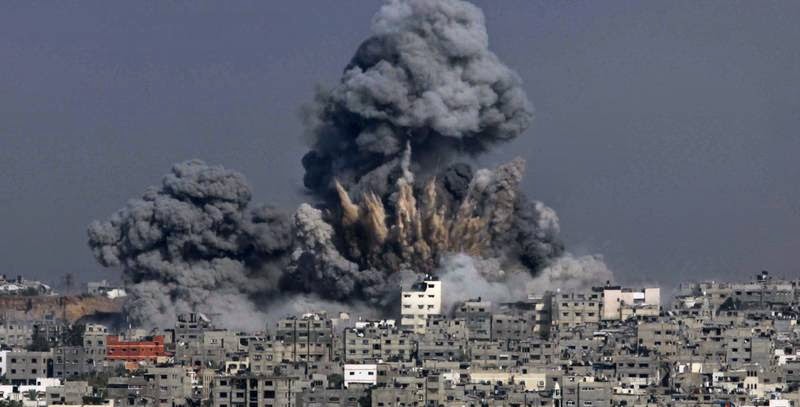
225 Jewish survivors and descendents of Jewish survivors of the Nazi genocide have signed on to this letter condemning Israel’s massacre on Gaza and calling for an end to the genocide of the Palestinian people. In the letter, they also speak out against the abuse of their histories to promote the dehumanization of Palestinians advanced by Elie Wiesel among others in his recent ads placed in the New York Times, Wall Street Journal, Washington Post and the Guardian. If you are a survivor of the genocide or a descendent of survivors, please click here and scroll to the bottom to add your name to the letter. Please donate to help us place this letter with its signatories as an advertisement in the New York Times in order to convey the message that never again means NEVER AGAIN FOR ANYONE!
Jewish survivors and descendents of survivors of Nazi genocide unequivocally condemn the massacre of Palestinians in Gaza
As Jewish survivors and descendents of survivors of the Nazi genocide we unequivocally condemn the massacre of Palestinians in Gaza and the ongoing occupation and colonization of historic Palestine. We further condemn the United States for providing Israel with the funding to carry out the attack, and Western states more generally for using their diplomatic muscle to protect Israel from condemnation. Genocide begins with the silence of the world.
We are alarmed by the extreme, racist dehumanization of Palestinians in Israeli society, which has reached a fever-pitch. In Israel, politicians and pundits in The Times of Israel and The Jerusalem Post have called openly for genocide of Palestinians and right-wing Israelis are adopting Neo-Nazi insignia.
Furthermore, we are disgusted and outraged by Elie Wiesel’s abuse of our history in these pages to promote blatant falsehoods used to justify the unjustifiable: Israel’s wholesale effort to destroy Gaza and the murder of nearly 2,000 Palestinians, including many hundreds of children. Nothing can justify bombing UN shelters, homes, hospitals and universities. Nothing can justify depriving people of electricity and water.
We must raise our collective voices and use our collective power to bring about an end to all forms of racism, including the ongoing genocide of Palestinian people. We call for an immediate end to the siege against and blockade of Gaza. We call for the full economic, cultural and academic boycott of Israel. “Never again” must mean NEVER AGAIN FOR ANYONE!
Signed,
Survivors
Hajo Meyer, survivor of Auschwitz, The Netherlands.
Henri Wajnblum, survivor and son of victim of Nazi genocide, Belgium.
Renate Bridenthal, child refugee from Hitler, granddaughter of Auschwitz victim, United States.
Marianka Ehrlich Ross, survivor of Nazi ethnic cleansing in Vienna, Austria. Now lives in United States.
Annette Herskovits, survived in hiding in France and daughter of parents who were murdered in Auschwitz, United States.
Irena Klepfisz, child survivor from the Warsaw Ghetto, Poland. Now lives in United States.
Karen Pomer, granddaughter of member of Dutch resistance and survivor of Bergen Belsen. Now lives in the United States.
Hedy Epstein, her parents & other family members were deported to Camp de Gurs & subsequently all perished in Auschwitz. Now lives in United States.
Lillian Rosengarten, survivor of the Nazi Holocaust, United States.
Suzanne Weiss, survived in hiding in France, and daughter of a mother who was murdered in Auschwitz. Now lives in Canada.
H. Richard Leuchtag, survivor, United States.
Ervin Somogyi, survivor and daughter of survivors, United States.
Ilse Hadda, survivor on Kindertransport to England. Now lives in United States.
Jacques Glaser, survivor, France.
Norbert Hirschhorn, refugee of Nazi genocide and grandson of three grandparents who died in the Shoah, London.
Eva Naylor, surivor, New Zealand.
Suzanne Ross, child refugee from Nazi occupation in Belgium, two thirds of family perished in the Lodz Ghetto, in Auschwitz, and other Camps, United States.
Bernard Swierszcz, Polish survivor, lost relatives in Majdanek concentration camp. Now lives in the United States.
Joseph Klinkov, hidden child in Poland, still lives in Poland.
Nicole Milner, survivor from Belgium. Now lives in United States.
Hedi Saraf, child survivor and daughter of survivor of Dachau, United States.
Barbara Roose, survivor from Germany, half-sister killed in Auschwitz, United States.
Sonia Herzbrun, survivor of Nazi genocide, France.
Ivan Huber, survivor with my parents, but 3 of 4 grandparents murdered, United States.
Altman Janina, survivor of Janowski concentration camp, Lvov. Lives in Israel.
Leibu Strul Zalman, survivor from Vaslui Romania. Lives in Jerusalem, Palestine.
Miriam Almeleh, survivor, United States.
George Bartenieff, child survivor from Germany and son of survivors, United States.
Margarete Liebstaedter, survivor, hidden by Christian people in Holland. Lives in Belgium.
Edith Bell, survivor of Westerbork, Theresienstadt, Auschwitz and Kurzbach. Lives in United States.
Janine Euvrard, survivor, France.
Harry Halbreich, survivor, German.
Children of survivors
Liliana Kaczerginski, daughter of Vilna ghetto resistance fighter and granddaughter of murdered in Ponary woods, Lithuania. Now lives in France.
Jean-Claude Meyer, son of Marcel, shot as a hostage by the Nazis, whose sister and parents died in Auschwitz. Now lives in France.
Chava Finkler, daughter of survivor of Starachovice labour camp, Poland. Now lives in Canada.
Micah Bazant, child of a survivor of the Nazi genocide, United States.
Sylvia Schwartz, daughter and granddaughter of survivors of the Nazi genocide, United States.
Margot Goldstein, daughter and granddaughter of survivors of the Nazi genocide, United States.
Ellen Schwarz Wasfi, daughter of survivors from Vienna, Austria. Now lives in United States.
Lisa Kosowski, daughter of survivor and granddaughter of Auschwitz victims, United States.
Daniel Strum, son of a refugee from Vienna, who, with his parents were forced to flee in 1939, his maternal grand-parents were lost, United States.
Bruce Ballin, son of survivors, some relatives of parents died in camps, one relative beheaded for being in the Baum Resistance Group, United States.
Rachel Duell, daughter of survivors from Germany and Poland, United States.
Tom Mayer, son of survivor and grandson of victims, United States.
Alex Nissen, daughter of survivors who escaped but lost family in the Holocaust, United States.
Mark Aleshnick, son of survivor who lost most of her family in Nazi genocide, United States.
Prof. Haim Bresheeth, son of two survivors of Auschwitz and Bergen Belsen, London.
Todd Michael Edelman, son and grandson of survivors and great-grandson of victims of the Nazi genocide in Hungary, Romania and Slovakia, United States.
Tim Naylor, son of survivor, New Zealand. Victor Nepomnyashchy, son and grandson of survivors and grandson and relative of many victims, United States.
Tanya Ury, daughter of parents who fled Nazi Germany, granddaughter, great granddaugher and niece of survivors and those who died in concentration camps, Germany.
Rachel Giora, daughter of Polish Jews who fled Poland, Israel.
Jane Hirschmann, daughter of survivors, United States.
Jenny Heinz, daughter of survivor, United States.
Jaap Hamburger, son of survivors and grandchild of 4 grandparents murdered in Auschwitz, The Netherlands.
Elsa Auerbach, daughter of Jewish refugees from Nazi Germany, United States.
Beth Bruch, grandchild of German Jews who fled to US and great-grandchild of Nazi holocaust survivor, United States.
Julian Clegg, son and grandson of Austrian refugees, relative of Austrian and Hungarian concentration camp victims, Taiwan.
David Mizner, son of a survivor, relative of people who died in the Holocaust, United States.
Jeffrey J. Westcott, son and grandson of Holocaust survivors from Germany, United States.
Susan K. Jacoby, daughter of parents who were refugees from Nazi Germany, granddaughter of survivor of Buchenwald, United States.
Audrey Bomse, daughter of a survivor of Nazi ethnic cleansing in Vienna, lives in United States.
Daniel Gottschalk, son and grandson of refugees from the Holocaust, relative to various family members who died in the Holocaust, United States.
Ken Schneider, son of refugees from Vienna who lost many family members, United States.
Barbara Grossman, daughter of survivors, granddaughter of Holocaust victims, United States.
Abraham Weizfeld PhD, son of survivorswho escaped Warsaw (Jewish Bundist) and Lublin ghettos, Canada.
David Rohrlich, son of refugees from Vienna, grandson of victim, United States.
Walter Ballin, son of holocaust survivors, United States.
Fritzi Ross, daughter of survivor, granddaughter of Dachau survivor Hugo Rosenbaum, great-granddaughter and great-niece of victims, United States.
Reuben Roth, son of survivors who fled from Poland in 1939, Canada.
Tony Iltis, father fled from Czechoslovakia and grandmother murdered in Auschwitz, Australia.
Anne Hudes, daughter and granddaughter of survivors from Vienna, Austria, great-granddaughter of victims who perished in Auschwitz, United States.
Mateo Nube, son of survivor from Berlin, Germany. Lives in United States.
John Mifsud, son of survivors from Malta, United States.
Mike Okrent, son of two holocaust / concentration camp survivors, United States.
Susan Bailey, daughter of survivor and niece of victims, UK.
Brenda Lewis, child of Kindertransport survivor, parent’s family died in Auschwitz and Terezin. Lives in Canada.
Patricia Rincon-Mautner, daughter of survivor and granddaughter of survivor, Colombia.
Barak Michèle, daughter and grand-daughter of a survivor, many members of family were killed in Auschwitz or Bessarabia. Lives in Germany.
Jessica Blatt, daughter of child refugee survivor, both grandparents’ entire families killed in Poland. Lives in United States
Maia Ettinger, daughter & granddaughter of survivors, United States.
Ammiel Alcalay, child of survivors from then Yugoslavia. Lives in United States.
Julie Deborah Kosowski, daughter of hidden child survivor, grandparents did not return from Auschwitz, United States.
Julia Shpirt, daughter of survivor, United States.
Ruben Rosenberg Colorni, grandson and son of survivors, The Netherlands.
Victor Ginsburgh, son of survivors, Belgium.
Arianne Sved, daughter of a survivor and granddaughter of victim, Spain.
Rolf Verleger, son of survivors, father survived Auschwitz, mother survived deportation from Berlin to Estonia, other family did not survive. Lives in Germany.
Euvrard Janine, daughter of survivors, France.
H. Fleishon, daughter of survivors, United States.
Barbara Meyer, daughter of survivor in Polish concentration camps. Lives in Italy.
Susan Heuman, child of survivors and granddaughter of two grandparents murdered in a forest in Minsk. Lives in United States.
Rami Heled, son of survivors, all grandparents and family killed by the Germans in Treblinka, Oswiecim and Russia. Lives in Israel.
Eitan Altman, son of survivor, France.
Jorge Sved, son of survivor and grandson of victim, United Kingdom
Maria Kruczkowska, daughter of Lea Horowicz who survived the holocaust in Poland. Lives in Poland.
Sarah Lanzman, daughter of survivor of Auschwitz, United States.
Cheryl W, daughter, granddaughter and nieces of survivors, grandfather was a member of the Dutch Underground (Eindhoven). Lives in Australia.
Chris Holmquist, son of survivor, UK.
Beverly Stuart, daughter and granddaughter of survivors from Romania and Poland. Lives in United States.
Peter Truskier, son and grandson of survivors, United States.
Karen Bermann, daughter of a child refugee from Vienna. Lives in United States.
Rebecca Weston, daughter and granddaughter of survivor, Spain.
Lyn Bender, daughter, granddaughter & niece of survivors, Australia.
Grandchildren and great-grandchildren of survivors
Raphael Cohen, grandson of Jewish survivors of the Nazi genocide, United States.
Emma Rubin, granddaughter of a survivor of the Nazi genocide, United States.
Alex Safron, grandson of a survivor of the Nazi genocide, United States.
Danielle Feris, grandchild of a Polish grandmother whose whole family died in the Nazi Holocaust, United States.
Jesse Strauss, grandson of Polish survivors of the Nazi genocide, United States.
Anna Baltzer, granddaughter of survivors of Nazi genocide whose family members perished in Auschwitz (also grand-niece of members of the Belgian Resistance), United States.
Abigail Harms, granddaughter of Holocaust survivor from Austria, Now lives in United States.
Tessa Strauss, granddaughter of Polish Jewish survivors of the Nazi genocide, United States.
Caroline Picker, granddaughter of survivors of the Nazi genocide, United States.
Amalle Dublon, grandchild and great-grandchild of survivors of the Nazi holocaust, United States.
Antonie Kaufmann Churg, 3rd cousin of Ann Frank and grand-daughter of survivors, United States.
Aliza Shvarts, granddaughter of survivors, United States.
Linda Mamoun, granddaughter of survivors, United States.
Abby Okrent, granddaughter of survivors of Auschwitz, Stuthoff and the Lodz Ghetto, United States.
Ted Auerbach, grandson of survivor whose whole family died in the Holocaust, United States.
Bob Wilson, grandson of a survivor, United States.
Katharine Wallerstein, granddaughter of survivors and relative of many who perished, United States.
Sylvia Finzi, granddaughter and niece of Holocaust victims murdered in Auschwitz, London and Berlin.
Esteban Schmelz, grandson of KZ-Theresienstadt victim, Mexico City.
Françoise Basch, grand daughter of Victor and Ilona Basch murdered by the Gestapo and the French Milice, France.
Gabriel Alkon, grandson of Holocaust survivors, Untied States.
Nirit Ben-Ari, grandchild of Polish grandparents from both sides whose entire family was killed in the Nazi Holocaust, United States.
Heike Schotten, granddaughter of refugees from Nazi Germany who escaped the genocide, United States.
Ike af Carlstèn, grandson of survivor, Norway.
Elias Lazarus, grandson of Holocaust refugees from Dresden, United States and Australia.
Laura Mandelberg, granddaughter of Holocaust survivors, United States.
Josh Ruebner, grandson of Nazi Holocaust survivors, United States.
Shirley Feldman, granddaughter of survivors, United States.
Nuno Cesar Ferreira, grandson of survivor, Brazil.
Andrea Land, granddaugher of survivors who fled programs in Poland, all European relatives died in German and Polish concentration camps, United States.
Sarah Goldman, granddaughter of survivors of the Nazi genocide, United States.
Baruch Wolski, grandson of survivors, Austria.
Frank Amahran, grandson of survivor, United States.
Eve Spangler, granddaughter of Holocaust NON-survivor, United States.
Gil Medovoy, grandchild of Fela Hornstein who lost her enitre family in Poland during the Nazi genocide, United States.
Michael Hoffman, grandson of survivors, rest of family killed in Poland during Holocaust, live in El Salvador.
Sarah Hogarth, granddaughter of a survivor whose entire family was killed at Auschwitz, United States.
Natalie Rothman, great granddaughter of Holocaust victims in Warsaw. Now lives in Canada.
Yotam Amit, great-grandson of Polish Jew who fled Poland, United States.
Daniel Boyarin, great grandson of victims of the Nazi genocide, United States.
Maria Luban, great-granddaughter of survivors of the Holocaust, United States.
Tibby Brooks, granddaughter, niece, and cousin of victims of Nazis in Ukraine. Lives in United States.
Dan Berger, grandson of survivor, United States.
Dani Baurer, granddaughter of Baruch Pollack, survivor of Auschwitz. Lives in United States.
Talia Baurer, granddaughter of a survivor, United States.
Evan Cofsky, grandson of survivor, UK.
Annie Sicherman, granddaughter of survivors, United States.
Anna Heyman, granddaughter of survivors, UK.
Maya Ober, granddaughter of survivor and relative of deceased in Teresienstadt and Auschwitz, Tel Aviv.
Anne Haan, granddaughter of Joseph Slagter, survivor of Auschwitz. Lives in The Netherlands.
Oliver Ginsberg, grandson of victim, Germany.
Alexia Zdral, granddaughter of Polish survivors, United States.
Mitchel Bollag, grandson of Stanislaus Eisner, who was living in Czechoslovakia before being sent to a concentration camp. United States.
Vivienne Porzsolt, granddaughter of victims of Nazi genocide, Australia.
Lisa Nessan, granddaughter of survivors, United States.
Kally Alexandrou, granddaughter of survivors, Australia.
Laura Ostrow, granddaughter of survivors, United States
Anette Jacobson, granddaughter of relatives killed, town of Kamen Kashirsk, Poland. Lives in United States.
Tamar Yaron (Teresa Werner), granddaughter and niece of victims of the Nazi genocide in Poland, Israel.
Antonio Roman-Alcalá, grandson of survivor, United States.
Jeremy Luban, grandson of survivor, United States.
Heather West, granddaughter of survivors and relative of other victims, United States.
Jeff Ethan Au Green, grandson of survivor who escaped from a Nazi work camp and hid in the Polish-Ukranian forest, United States.
Johanna Haan, daughter and granddaughter of victims in the Netherlands. Lives in the Netherlands.
Aron Ben Miriam, son of and nephew of survivors from Auschwitz, Bergen-Belsen, Salzwedel, Lodz ghetto. Lives in United States.
Noa Shaindlinger, granddaughter of four holocaust survivors, Canada.
Merilyn Moos, granddaughter, cousin and niece murdered victims, UK.
Ruth Tenne, granddaughter and relative of those who perished in Warsaw Ghetto, London.
Craig Berman, grandson of Holocaust survivors, UK.
Nell Hirschmann-Levy, granddaughter of survivors from Germany. Lives in United States.
Osha Neumann, grandson of Gertrud Neumann who died in Theresienstadt. Lives in United States.
Georg Frankl, Grandson of survivor Ernst-Immo Frankl who survived German work camp. Lives in Germany.
Julian Drix, grandson of two survivors from Poland, including survivor and escapee from liquidated Janowska concentration camp in Lwow, Poland. Lives in United States.
Katrina Mayer, grandson and relative of victims, UK.
Avigail Abarbanel, granddaughter of survivors, Scotland.
Denni Turp, granddaughter of Michael Prooth, survivor, UK.
Fenya Fischler, granddaughter of survivors, UK.
Yakira Teitel, granddaughter of German Jewish refugees, great-granddaughter of survivor, United States.
Sarah, granddaughter of survivor, the Netherlands.
Susan Koppelman, granddaughter of survivor, United States
Hana Umeda, granddaughter of survivor, Warsaw.
Jordan Silverstein, grandson of two survivors, Canada.
Olivia Kraus, great-grandaughter of victims, granddaughter and daughter of family that fled Austria and Czechoslovakia. Lives in United States.
Emily (Chisefsky) Alma, great granddaughter and great grandniece of victims in Bialystok, Poland, United States.
Inbal Amin, great-granddaughter of a mother and son that escaped and related to plenty that didn’t, United States.
Matteo Luban, great-granddaughter of survivors, United States.
Additional relatives of survivors.
Terri Ginsberg, niece of a survivor of the Nazi genocide, United States.
Nathan Pollack, relative of Holocaust survivors and victims, United States.
Marcy Winograd, relative of victims, United States.
Rabbi Borukh Goldberg, relative of many victims, United States.
Martin Davidson, great-nephew of victims who lived in the Netherlands, Spain.
Miriam Pickens, relative of survivors, United States.
Dorothy Werner, spouse of survivor, United States.
Hyman and Hazel Rochman, relatives of Holocaust victims, United States.
Rich Siegel, cousin of victims who were rounded up and shot in town square of Czestochowa, Poland. Now lives in United States.
Ignacio Israel Cruz-Lara, relative of survivor, Mexico.
Debra Stuckgold, relative of survivors, United States.
Joel Kovel, relatives killed at Babi Yar, United States.
Carol Krauthamer Smith, niece of survivors of the Nazi genocide, United States.
Chandra Ahuva Hauptman, relatives from grandfather’s family died in Lodz ghetto, one survivor cousin and many deceased from Auschwitz, United States.
Shelly Weiss, relative of Holocaust victims, United States.
Carol Sanders, niece and cousin of victims of Holocaust in Poland, United States.
Sandra Rosen, great-niece and cousin of survivors, United States.
Raquel Hiller, relative of victims in Poland. Now lives in Mexico.
Alex Kantrowitz, most of father’s family murdered Nesvizh, Belarus 1941. Lives in United States.
Michael Steven Smith, many relatives were killed in Hungary. Lives in United States.
Linda Moore, relative of survivors and victims, United States.
Juliet VanEenwyk, niece and cousin of Hungarian survivors, United States.
Anya Achtenberg, grand niece, niece, cousin of victims tortured and murdered in Ukraine. Lives in United States.
Betsy Wolf-Graves, great niece of uncle who shot himself as he was about to be arrested by Nazis, United States.
Abecassis Pierre, grand-uncle died in concentration camp, France.
Robert Rosenthal, great-nephew and cousin of survivors from Poland. Lives in United States.
Régine Bohar, relative of victims sent to Auschwitz, Canada.
Denise Rickles, relative of survivors and victims in Poland. Lives in United States.
Louis Hirsch, relative of victims, United States.
Concepción Marcos, relative of victim, Spain.
George Sved, relative of victim, Spain.
Judith Berlowitz, relative of victims and survivors, United States.
Rebecca Sturgeon, descendant of Holocaust survivor from Amsterdam. Lives in UK.
Justin Levy, relative of victims and survivors, Ireland.
Sam Semoff, relative of survivors and victims, UK.
Karen Malpede, Spouse of hidden child who then fled Germany. United States
Michel Euvrard, husband of Holocaust survivor, France.